Poetic immortality
Metamorphoses (Ovid Edition)Poetic immortality is the principle by which poetry outlasts the mortal bodies and perishable institutions that furnish its subjects. In the poem, transformation governs the visible world, yet song gives those transformations durable form: what suffers change in nature can remain present in memory, ceremony, and literary fame. The work therefore presents its own making as an act of preservation, turning violence, desire, metamorphosis, and death into material that can reach audiences far beyond the moment of action.
The Poem as an Act of Preservation
The poem announces this purpose at its beginning by making changed bodies its subject and by asking the gods who produced such marvels to inspire the poet’s song. The invocation joins supernatural power to human composition: the gods generate the miracles, but poetry gives them an ordered and transmissible history. Metamorphosis is thus not only an event within the narrative. It is also the governing condition that makes the poem necessary, because forms continually pass into other forms and require a voice capable of gathering those changes into remembrance.
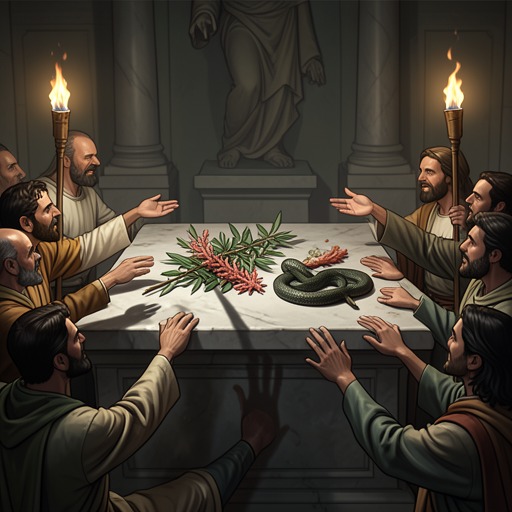
The relation between transformation and memory becomes especially explicit after Apollo’s victory over Python. The serpent’s death might have been only a violent episode, but Apollo preserves its fame by establishing the Pythian Games, where noble youths compete for mastery. Public ritual extends the life of a deed beyond the body that performed it; athletic contests repeatedly reactivate the memory of Apollo’s triumph. The episode demonstrates that fame can be institutionalized, while the poem performs a parallel work in language by ensuring that the deed remains available to readers.
Fame, Metamorphosis, and Material Signs
Apollo’s encounter with Daphne offers a more intimate version of the same process. When Daphne escapes his embrace by becoming a laurel tree, Apollo cannot possess her as a mistress, but he declares that he will espouse her as his tree and makes her the prize of honor and renown. The transformation denies one form of desire while creating another kind of permanence. Daphne’s human life and personal freedom are lost to the change, yet the laurel becomes an enduring emblem attached to Apollo’s authority, victory, and distinction. Her new form carries the memory of the rejected union into every later act of honor.
This episode also reveals the ambiguity of poetic preservation. To make something memorable is not necessarily to restore what has been lost. Daphne is preserved as a sign, but not returned to her former body; her survival is inseparable from the violence and renunciation that produced it. Poetry likewise preserves the event by fixing its consequences in a beautiful verbal form, even when the transformation itself remains painful. The lasting image is therefore both memorial and remainder: it keeps the past visible while reminding the reader that the original life cannot be recovered unchanged.
Song Against Death and Oblivion
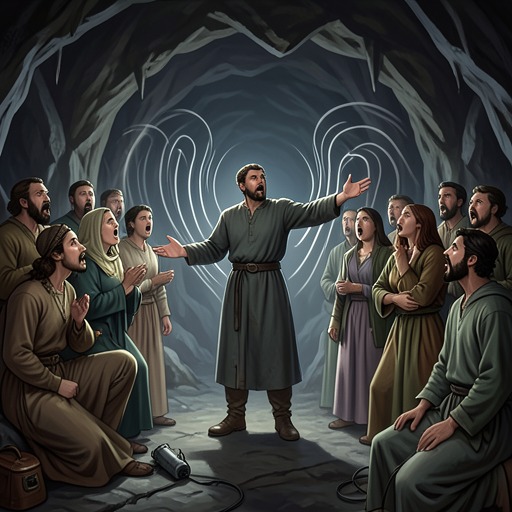
The poem’s treatment of Orpheus gives poetic power its clearest emotional test. After Orpheus loses Eurydice, he complains continually against rigid Fate and arraigns the inexorable gods of the underworld before hastening to high Rhodope and Mount Haemus. His movement from accusation to wandering shows grief refusing to remain private or silent. The lost beloved cannot be restored through the singer’s appeal, but the singer’s lament converts failed rescue into a story capable of surviving the death it mourns.
When Orpheus himself dies, the loss becomes a scene of collective recognition. Soft warblers of the feathered kind bewail him; a savage audience grieves for him; and the rocks and woods that had often followed his song respond to his departure. The natural world becomes a chorus for the dead poet. This response does not abolish death, but it shows that song has altered the relation between the mortal singer and the world around him: creatures, rocks, and woods retain the trace of the music after the musician has vanished. Orpheus’s power persists not as bodily survival but as reverberation in other beings.
Mortal Decay and the Poet’s Nobler Part
The final meditation makes the doctrine universal and self-reflexive. The completed work is said not to fear the rage of storms, fire, war, or wasting age. These forces name the principal enemies of permanence: nature can destroy, conflict can erase, and time can wear down even what appears secure. Yet the poem distinguishes the mortal being, which alone can decay, from the poet’s “nobler part,” identified with fame and destined to reach the skies and rise with blooming honors in later times.
That conclusion does not claim that bodies literally escape destruction. On the contrary, it accepts decay as the defining limit of mortal existence. What survives is a different order of being: the shaped work, the remembered name, and the fame carried forward by later readers. The poem’s confidence rests on form rather than flesh. Its finished structure becomes a vessel able to endure pressures that destroy ordinary things, and its future life depends on transmission across time rather than on any refusal of death.
Narrative Significance
Poetic immortality binds the poem’s many transformations into a single theory of literature. Apollo’s institutional commemoration of Python, Daphne’s conversion into a laurel emblem, and the mourning that follows Orpheus’s death all show different mechanisms by which an event exceeds its original moment: ritual repeats it, an object embodies it, and lament gives it voice. The final claim gathers these mechanisms into the poem’s own self-defense, presenting composition as the most comprehensive form of remembrance.
The concept also creates a productive contrast between change and endurance. Everything in the narrated world is vulnerable to alteration, but alteration does not equal annihilation; a body becomes a tree, a deed becomes a festival, a singer becomes a memory, and mortal experience becomes verse. Poetry does not halt metamorphosis. It gives metamorphosis a durable afterlife, allowing what has changed to remain intelligible and emotionally active for those who encounter it later.